
Business Text Messaging Is Evolving With RCS
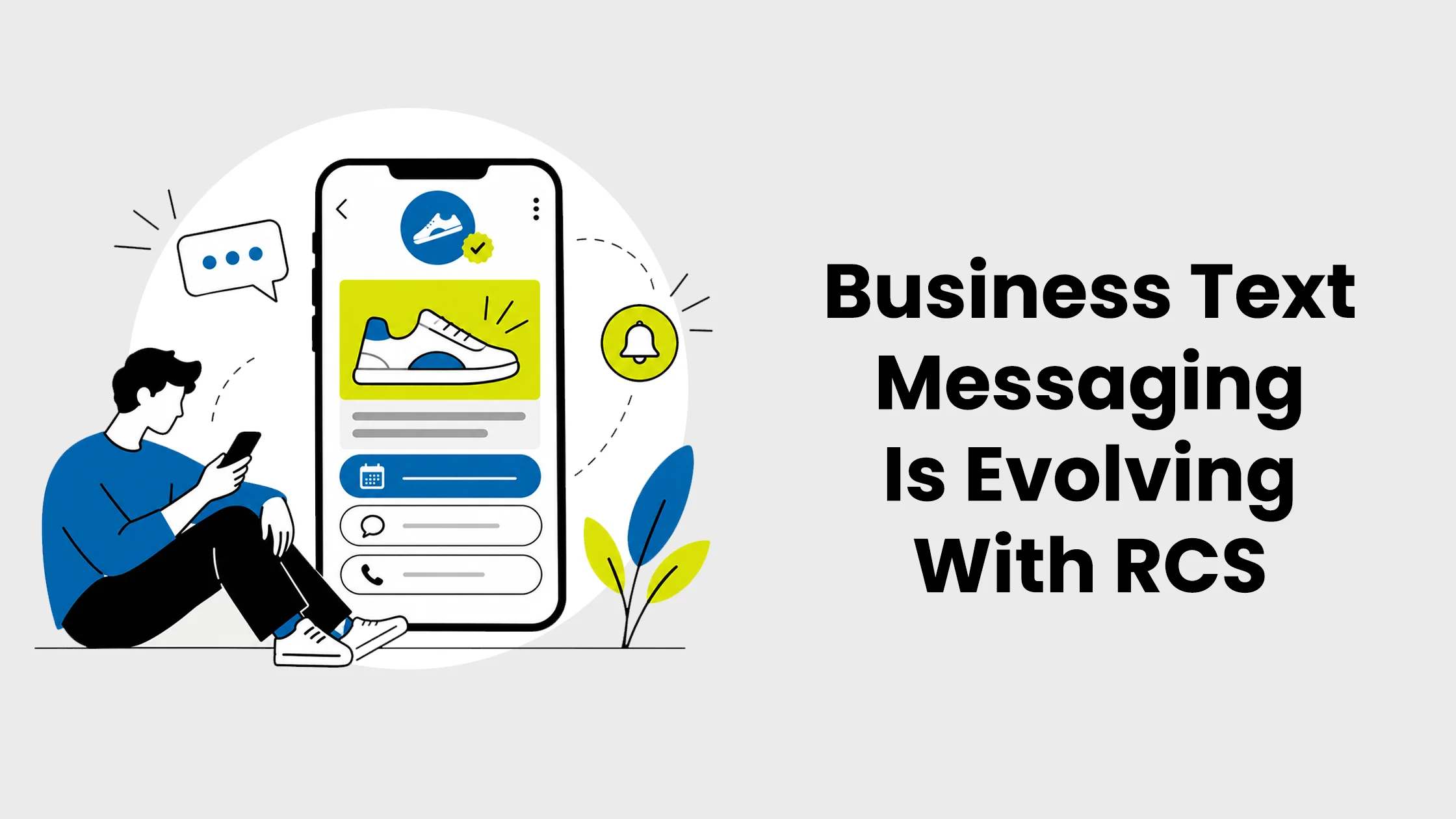
Business text messaging has earned its place as one of the most effective communication channels available to businesses. It’s immediate, personal, and easy for customers to engage with. That hasn’t changed. What has changed is how customers expect business text messaging to look and feel once it reaches their phones.
With RCS now supported on both Android and iPhone, business text messaging is evolving beyond traditional plain-text communication. Rich Communication Services (RCS) introduces a more interactive, visually engaging messaging experience, allowing businesses to communicate with greater clarity, recognizable branding, and more convenient response options. This shift doesn’t signal the end of SMS. Instead, it represents the next stage in the evolution of business text messaging — one that prioritizes clarity, trust, and interaction across supported devices.
TXTPass is embracing this evolution by treating RCS as a seamless upgrade to business text messaging. Rather than forcing businesses to abandon SMS or learn an entirely new system, TXTPass bridges the gap, allowing companies to benefit from richer messaging without sacrificing simplicity or reliability.
Why Business Text Messaging Is No Longer Just SMS
For years, SMS provided everything businesses needed for straightforward communication. Appointment reminders, order confirmations, alerts, and follow-ups could reach customers quickly without requiring additional apps or complicated processes.
Those advantages remain important, but customer expectations have evolved. People regularly interact with businesses through messaging experiences that include recognizable branding, images, and convenient response options. Traditional SMS, while dependable, offers fewer opportunities to create that type of interaction.
A standard SMS message typically arrives from a phone number rather than a recognizable branded sender. Customers may need to follow external links, type specific responses, or navigate away from the conversation to complete an action. Although these steps are manageable, they can introduce unnecessary friction.
What RCS Adds to Business Text Messaging
RCS introduces capabilities that make business text messaging more engaging and interactive while preserving the convenience customers associate with receiving a text.
One important feature is branded sender identification. With supported RCS business messaging experiences, customers can see recognizable business information rather than relying solely on an unfamiliar number. This helps establish context and makes it easier to identify who is contacting them.
Rich media is another significant improvement. Instead of communicating entirely through text, businesses can incorporate images and other supported content formats to present information more clearly. Product announcements, service updates, and promotional messages can become more informative without requiring lengthy explanations.
RCS also supports interactive elements that simplify common customer actions. Depending on the messaging experience, businesses can provide suggested replies or action buttons that help customers confirm appointments, request information, or continue conversations.
Consider an appointment reminder. A traditional SMS might ask customers to reply with a specific word or follow a link to make changes. An RCS message can offer clearly labeled response options, making the next step more obvious.
These capabilities give businesses greater flexibility in how they communicate. Rather than relying on additional messages to explain every action, they can create more intuitive conversations that encourage customers to respond.
How SMS and RCS Work Together
Despite its expanded capabilities, RCS doesn’t eliminate the need for SMS. Both technologies serve important purposes within an effective business text messaging strategy.
SMS remains valuable because of its broad compatibility and straightforward delivery. Appointment reminders, account notifications, order updates, and time-sensitive alerts often need little more than a concise message delivered to the correct number.
RCS provides additional value when communication benefits from recognizable branding, visual content, or interactive options. Marketing campaigns, customer service conversations, and engagement-focused messages can use these capabilities to provide a more complete experience.
The distinction matters because RCS availability and supported features can vary depending on the customer’s device, carrier, messaging application, and business messaging configuration. Even with RCS supported on both major mobile platforms, businesses cannot assume that every recipient will have access to the same capabilities.
Maintaining SMS alongside RCS allows businesses to account for those differences rather than relying exclusively on richer messaging formats.
For companies already using business text messaging, this approach supports a practical transition. Existing communication needs remain relevant, while RCS creates opportunities to improve interactions where its capabilities are available.
Why Businesses Want One Platform for SMS and RCS
As business text messaging becomes more sophisticated, businesses are growing less tolerant of fragmented communication systems. Managing SMS and RCS through separate platforms introduces unnecessary friction into daily operations, making it harder to maintain consistency and efficiency across customer conversations.
When teams are required to switch between multiple tools, business text messaging quickly becomes more complex than it needs to be. Message histories can become scattered, branding may vary from one interaction to the next, and response times often suffer. Over time, this fragmentation leads to missed opportunities, increased training demands, and a higher likelihood of errors — all of which directly affect the customer experience.
A unified platform for business text messaging eliminates these issues by bringing SMS and RCS together in a single dashboard. Businesses can manage conversations, launch campaigns, and monitor engagement without worrying about delivery formats or device compatibility. The platform handles those details in the background, allowing teams to focus on the message itself rather than the mechanics behind it.
Consistency is another major reason businesses prefer a unified approach. Customers don’t distinguish between SMS and RCS — they simply experience a conversation with a business. When messaging feels cohesive and familiar regardless of how it’s delivered, trust increases and engagement improves. By consolidating SMS and RCS into one system, businesses ensure that business text messaging remains clear, reliable, and easy to manage as customer expectations continue to evolve.
How TXTPass Makes RCS a Seamless Part of Business Text Messaging
TXTPass was built around a simple idea: business text messaging should be powerful enough to drive results, but simple enough to use without technical expertise. That philosophy is especially important as richer messaging capabilities like RCS become more common. Rather than treating RCS as an entirely separate communication channel, TXTPass approaches it as a natural extension of business text messaging.
One of the biggest considerations when adopting new messaging technology is how it fits into existing operations. Businesses need solutions that support their communication goals without requiring unnecessary changes to familiar processes. TXTPass emphasizes a straightforward approach to business text messaging, helping teams explore richer communication capabilities while maintaining a focus on usability and efficiency.
The platform also provides tools that support everyday customer communication. Message templates help teams communicate faster while maintaining accuracy and brand consistency. Keyword-triggered auto-replies allow businesses to respond to common inquiries automatically, while drip campaigns and instant responses help maintain engagement without requiring constant manual attention. These capabilities give businesses practical ways to organize customer interactions and manage ongoing communication.
With transparent pricing, straightforward number setup, and an intuitive dashboard, TXTPass keeps accessibility at the center of its approach. As RCS expands the possibilities of business text messaging, TXTPass remains focused on helping businesses communicate effectively through tools that are practical, manageable, and designed to support their evolving needs.
The Future of Business Text Messaging Is an Upgrade, Not a Reset
Business text messaging continues to evolve as customers expect more recognizable, interactive, and convenient communication. RCS builds on the reliability of SMS by introducing richer messaging experiences, allowing businesses to improve customer interactions without abandoning the communication methods they already depend on.
With TXTPass, businesses can take a more streamlined approach to this evolution. By bringing SMS and RCS into a familiar messaging experience, TXTPass helps businesses adapt to changing expectations while keeping communication simple and manageable. Ready to explore what’s next for your business text messaging strategy? Try TXTPass today.


